
A detector scores a page you know a person wrote as likely AI. You should not act on the score alone.
Three Google documents on AI content and spam policy never mention AI detection tools. A July 2026 Ahrefs study found heavily AI-scored pages indexed less often, with fewer impressions. Some of them still rank first. A high score is a reason to reread the page, and it does not show the page is weak.
What the evidence shows
Many detectors score how predictable the wording is (Liang and colleagues call this perplexity). GPTZero describes a second commonly cited measure, burstiness, as variation in sentence length and rhythm. Detectors see only the text, so they cannot know who wrote it. None of the sources below reports results for adult-sector content, and we found no study that does.
Scores do not mean the same thing in every tool. Ahrefs reports its estimate of how much of the page is AI-written. Originality.ai says its score is a confidence level, not the share of the text. Detectors also disagree with each other. In the Liang study, all seven detectors flagged 18 of the 91 non-native essays. At least one flagged 89.
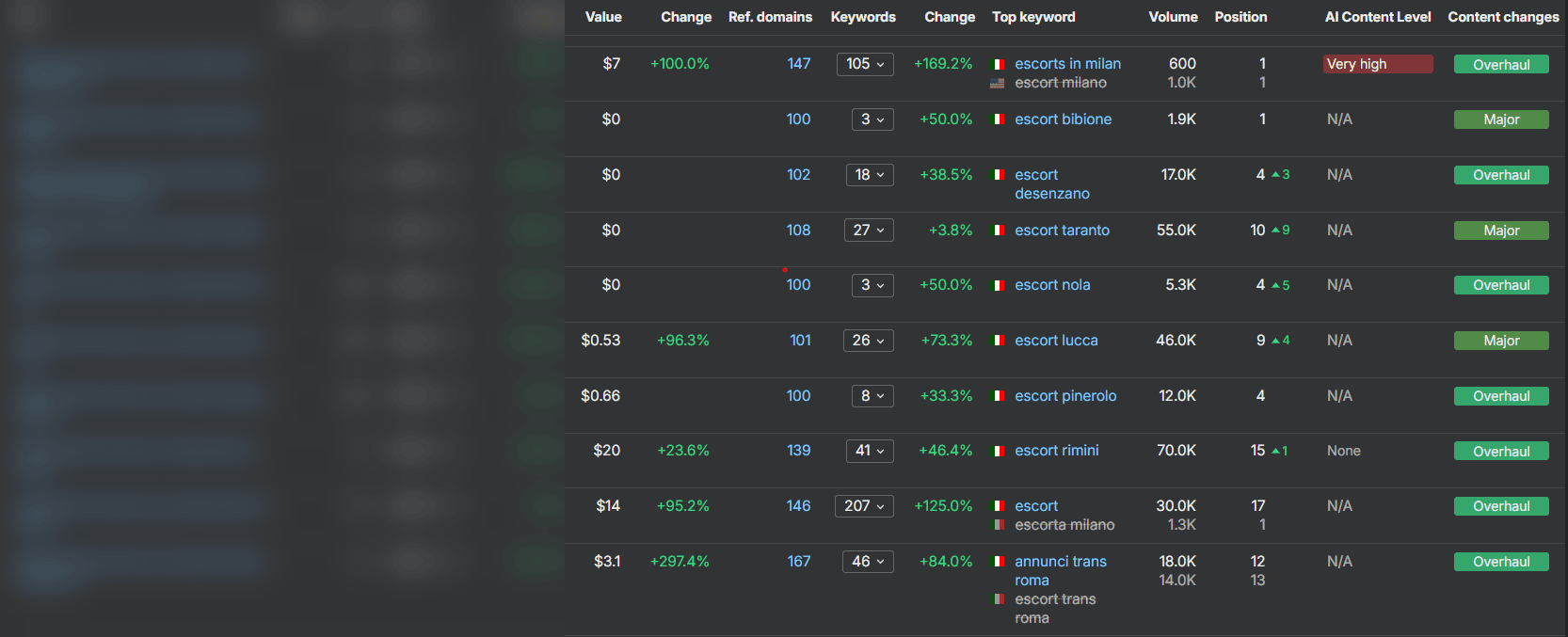
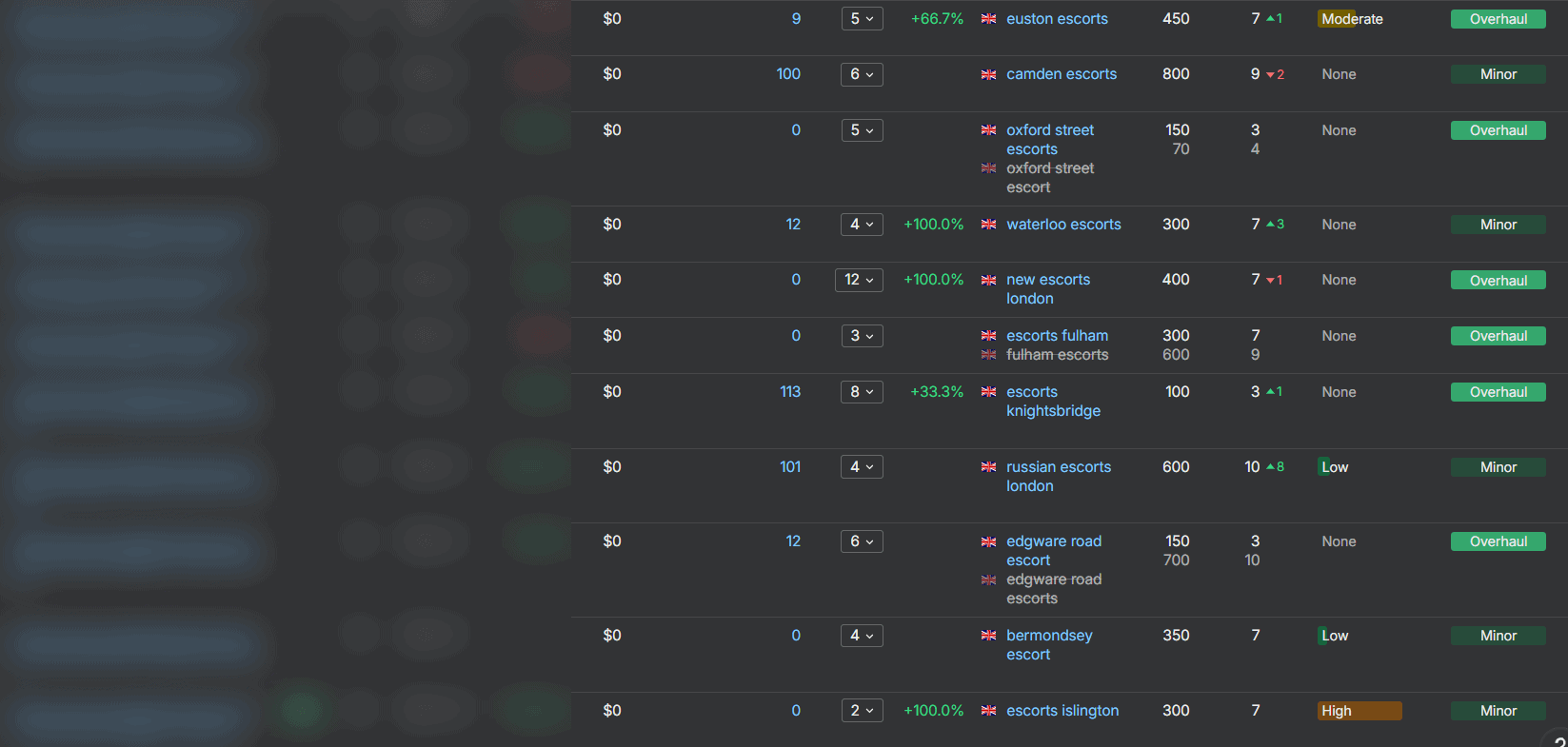
Ahrefs labels a page Low below 20% AI and Moderate from 20 to 50%. High runs from 50 to 80% and Very high is 80% or more. Ahrefs scores only pages of 350 words or more.
| Source and date | What it shows | Main limit |
|---|---|---|
| Ahrefs study, 27 July 2026. About 150,000 top-10 pages from 100,000 June 2026 searches, plus about 100,000 pages for indexing. | 54.7% of pages in positions 1 to 3 scored under 20% AI. Ahrefs counted 49% of Low AI pages as indexed, against 40% of Very high AI pages. | Ahrefs runs its own detector and says it is not perfect. Heavy-AI sites may be newer or lower authority, so the score may not be the cause. |
| Google on AI content, 8 February 2023; generative AI, updated 1 October 2026; spam policies, updated 28 August 2026. | Google’s ranking systems aim to reward original, high-quality, people-first content, “however it is produced”. Scaled content abuse means making many pages mainly to manipulate rankings, however someone makes them. | None of the three mentions AI detection tools. Their silence does not show whether Google uses AI-text detection. |
| Liang and colleagues at Stanford, submitted April 2023, revised July 2023. Seven detectors, tested on 91 essays by non-native English writers and 88 US eighth-grade essays. | The average false positive rate on the non-native essays was 61.22%. The detectors classified the eighth-grade essays almost perfectly. | 2023 detectors and a small sample. The 61.22% rate is for non-native writers, and detectors flagged eighth-grade essays more often after ChatGPT simplified them. |
| Saha and Feizi, submitted February 2025, revised May 2025. Twelve detectors, tested on about 14,700 samples of human text polished by AI, from extremely minor to major. | Detectors often flag even minimally polished text as AI. They struggle to tell degrees of AI involvement apart. | An arXiv preprint that did not test the Ahrefs detector. Detection rates for minimal GPT-4o polish ranged from 10% to 75%, depending on the detector. |
Pages scoring 80% AI or higher were 8.4% of position 1 results and 11.7% of position 10 results. Low and Moderate pages earned two to three times the impressions of High and Very high pages. That comparison used about 81,000 URLs over a limited period. Ahrefs calls the indexing gap meaningful but far from disqualifying. On impressions, Ahrefs says it would be wrong to assume any automatic suppression.
The ranking sample covers only pages Google already ranks. Ahrefs counts a page as indexed if it ranks for any keyword. A Search Console impression since January 2026 or a site: search hit also counts.
What this means for your pages
Google’s spam policy targets pages made in volume to manipulate rankings without helping visitors, however someone makes them. Our Very High End case study points to thin pages as the risk worth your time. Through 2025, a run of algorithm updates punished thin content across the sector. The case study names thin content as the reason the updates hit so hard. By December 2025, Very High End’s monthly clicks had fallen to 1,455 and its average position sat around 40.
We audited every page, rewrote the weak ones and built location pages for the London districts that matter. We also kept acquiring authority links every month. By May 2026, the case study reports monthly clicks up 236% from the December low. Average position had improved from 41 to 16. That is one site’s result and no forecast for yours.
What to do with a flagged page
- Read the flagged passages for real defects, such as vague claims or repeated phrasing. Fix those and leave sound copy alone. The score does not say what to change.
- Keep the brief, research notes, drafts and version history for each page. Then you can show how you made it.
- If someone sends you a score, ask which tool produced it. Ask which passages it flagged, then send your process evidence and the studies above.
- Look for thin city and location pages and for pages that repeat each other. Rewrite those first.
- Write your AI rule down for staff and freelancers. Ours is research, data analysis and writing briefs, never the final copy. Saha and Feizi found that detectors flag even lightly polished text. A rule that keeps AI out of the final copy gives you a plain answer when someone asks.
Our in-house experts write, refine and proofread every piece we deliver. The FAQ on our marketing page sets out the policy in full. Not sure whether a flagged page needs work? Ask us and we will tell you straight.
Keep up with the latest in adult marketing
Genuinely useful tips, tricks and news that will impact your adult business.
No generic rubbish that you already know! We hate spam as much as you.
By submitting this form, you agree to allow HauteLab to store and process the data that you have provided in accordance with our privacy policy.

We Help Ambitious Adult Brands Launch, Grow & Thrive.
At HauteLab, we have built a unique, systemised approach to marketing, design, and development for businesses in the luxury adult niche. Providing you with a one-stop solution to launch, market and maintain your project.
Let's talk